A concrete patio is built to last, but it won’t stay in great shape on its own. The materials used, the quality of the installation, and the care it receives over the years all affect how long it performs. Two patios poured on the same day can look very different a decade later if one was installed correctly and maintained while the other was neglected.
For most homeowners, a patio is more than just a place to set outdoor furniture. It’s where families have dinners, kids play, and guests gather. Understanding what affects a patio’s lifespan can help you protect that investment and avoid preventable repairs.
Let’s start by looking at how long a concrete patio can realistically last and what makes the biggest difference over time.
What’s the Average Lifespan of a Concrete Patio?
A well-built concrete patio can last 30 years or more. Some patios remain in excellent condition for 40 years or longer when they’re installed on a solid foundation and cared for over time.
That doesn’t mean every patio will reach that age. A patio that’s built on unstable soil, exposed to poor drainage, or left without maintenance may begin showing signs of wear much sooner.
It’s also important to separate appearance from structural condition. Small stains, faded color, or minor surface wear don’t mean the patio is failing. Those changes are normal after years of sun, rain, and foot traffic. Structural problems, such as large cracks or sections that begin to sink, matter more because they affect the patio’s strength and safety.
Different types of concrete patios also have similar life expectancies. Decorative finishes change the surface appearance, but they don’t automatically shorten the life of the slab underneath.
Understanding each option’s typical lifespan helps set realistic expectations.
Patio Type | Typical Lifespan |
Standard concrete patio | 30+ years |
Stamped concrete patio | 30+ years with regular sealing |
Exposed aggregate patio | 30+ years |
Colored concrete patio | 30+ years with proper maintenance |
A decorative finish doesn’t determine how long the patio lasts. The biggest factors are still the quality of the installation, the condition of the base, and the maintenance it receives throughout its life.
What Determines How Long a Concrete Patio Lasts?
Concrete doesn’t wear out overnight. Every patio begins aging the day it’s installed, but how quickly it ages depends on several important factors. Some happen before the concrete is even poured, while others continue to affect the patio for decades.
Three areas have the biggest impact on a concrete patio’s lifespan: the base underneath the slab, the concrete itself, and how the patio is installed.
A Strong Base Starts Everything
Everything above the ground depends on what’s below it.
Before pouring concrete, contractors remove loose soil and prepare a compacted base using crushed stone or similar material. This layer supports the slab and helps spread the weight across the ground.
If the base isn’t compacted properly, parts of the patio can begin to settle. As the ground moves, the concrete may crack or become uneven because it no longer has consistent support underneath.
A strong base also helps water drain away instead of collecting beneath the slab. Too much moisture under the patio can weaken the soil over time and increase the chance of settling.
Most homeowners never see this part of the project once the concrete is finished, but it’s one of the most important steps in building a patio that lasts.
The Right Concrete Mix
Concrete isn’t made from cement alone. It’s a mixture of cement, sand, gravel, and water. Each ingredient has a specific job, and changing the proportions changes how the finished concrete performs.
Adding too much water might make the concrete easier to spread, but it can also reduce its strength after it hardens. The right mix creates a patio that can handle everyday use, changing weather, and years of exposure to the elements.
The mix also needs to match the project. A patio built in an area with freezing winters may require a different concrete mix than one installed in a warmer climate because it needs to resist repeated freeze-thaw cycles.
Installation Makes a Difference
Good materials can only do so much if they’re installed poorly.
After the concrete is poured, it has to be leveled, finished, and allowed to cure properly. Curing is the process that lets concrete gain strength as it hardens. Rushing that process or allowing the surface to dry too quickly can reduce the patio’s long-term durability.
Control joints are another important part of the installation. These are planned grooves cut into the concrete that encourage small cracks to form in controlled locations instead of spreading randomly across the patio. While they don’t stop concrete from cracking altogether, they help keep those cracks smaller and less noticeable.
Drainage also matters. Build a patio with a slight slope so rainwater flows away from the house instead of collecting on the surface. Standing water can stain the concrete, increase the risk of surface damage, and create slippery areas after storms.
Concrete also needs enough time to gain strength after it’s poured. Although the surface may look dry fairly quickly, the concrete continues hardening beneath the surface. Waiting the recommended amount of time before placing heavy furniture or using the patio regularly helps protect its long-term durability.
What Can Shorten a Concrete Patio’s Lifespan?
Even a well-built patio faces years of sun, rain, changing temperatures, and daily use. Those conditions are normal, but certain problems can speed up wear and lead to repairs sooner than expected.
Knowing what causes damage makes it easier to catch small issues before they become expensive ones.
Water and Drainage Problems
Water is one of concrete’s biggest challenges.
Concrete may look solid, but it’s slightly porous. That means small amounts of water can soak into the surface over time. If rainwater collects in the same area because the patio doesn’t drain properly, moisture can slowly weaken the surface and increase the chance of staining or cracking.
Gutters that empty directly onto the patio or landscaping that directs water toward the slab can make the problem even worse.
Freeze-Thaw Cycles
Winter weather can be especially hard on concrete.
When water enters tiny pores or small cracks and then freezes, it expands. As that ice grows, it puts pressure on the surrounding concrete. Repeating that cycle throughout winter can enlarge small cracks and cause pieces of the surface to break away.
A quality sealer helps reduce the amount of water that enters the concrete, making freeze-thaw damage less likely.
Tree Roots and Ground Movement
The ground beneath a patio doesn’t always stay in the same position.
Tree roots continue growing long after a patio is installed. As they expand, they can lift sections of concrete or create uneven areas. Soil can also settle naturally over time, especially after periods of heavy rain or drought.
Small changes below the surface may not be noticeable at first, but they can eventually affect how level the patio remains.
Heavy Furniture and Everyday Use
Concrete is designed for outdoor living, but that doesn’t mean it can’t be damaged.
Dragging heavy furniture across the surface can leave scratches or wear away decorative finishes. Dropping heavy objects may chip the slab’s edges, and grills or fire pits left in the same spot for years can leave stains if spills aren’t cleaned up.
Normal use won’t shorten the life of a properly installed patio, but treating the surface with care helps preserve its appearance and durability for years.
Concrete Patio Maintenance That Helps It Last Longer
A concrete patio doesn’t need constant attention, but a little maintenance goes a long way. Most problems don’t appear overnight. Small cracks, standing water, or surface stains usually develop slowly, giving homeowners plenty of time to address them before they become larger repairs.
The goal isn’t to make your patio maintenance-free. It’s to protect the surface so it looks good and performs well for decades.
Keep the Surface Clean
Leaves, dirt, and pollen don’t just make a patio look messy. As they break down, they can trap moisture against the concrete and leave stains behind. Oil from grills, spilled food, and plant debris can also discolor the surface if they’re left too long.
Sweeping the patio regularly is one of the easiest ways to protect it. Washing it once or twice a year removes dirt that a broom can’t reach and helps you spot small cracks or other changes before they become bigger problems.
A pressure washer can help, but too much pressure may damage the surface, especially decorative finishes. A garden hose, a mild cleaner, and a stiff brush are often enough for routine cleaning.
Seal the Patio Every Few Years
A concrete sealer acts as a protective layer between the patio and the weather. It helps reduce the amount of water that soaks into the concrete, making stains, moisture damage, and freeze-thaw problems less likely.
Sealers don’t last forever. Sunlight, foot traffic, and rain gradually wear them away, so you need to reapply them from time to time.
How often depends on the sealer type, the local climate, and how much the patio is used. In many cases, resealing every two to three years helps maintain that protective barrier.
Stamped and colored concrete usually benefit the most from regular sealing because it also helps preserve the finish and keeps colors looking more vibrant.
Repair Small Cracks Early
Concrete naturally expands and contracts as temperatures change. Small hairline cracks can develop over time, and many of them are only cosmetic.
The problem starts when water enters those cracks. As temperatures rise and fall, the cracks can grow larger and allow even more moisture to reach the base beneath the patio.
Repairing small cracks early is usually faster and less expensive than waiting until sections of the patio begin to shift or settle.
The same warning signs contractors look for in damaged driveways also apply to patios. Growing cracks, uneven sections, and movement around the slab often point to a problem that’s getting worse, not better. Knowing what causes concrete driveway cracks and when they can be repaired instead of replaced can also help you recognize when a patio needs professional attention.
Watch for Drainage Issues
After it rains, water should move away from your patio. If puddles remain in the same area for hours or water regularly flows back toward the house, it’s worth finding the cause before it leads to damage.
Sometimes the problem is as simple as a clogged gutter or downspout. In other cases, the soil around the patio may have settled, changing the way water drains across the yard.
Fixing drainage problems early helps protect both the patio and your home’s foundation.
Caring for a concrete patio doesn’t require a long checklist. A few simple habits repeated throughout the year can make a noticeable difference over the slab’s life.
Maintenance Task | Recommended Frequency | Why It Matters |
Sweep away leaves and debris | As needed | Helps prevent stains and moisture buildup |
Wash the patio | Once or twice a year | Removes dirt and makes small problems easier to spot |
Apply a concrete sealer | Every 2 to 3 years | Reduces water absorption and helps protect the surface |
Inspect for cracks | Every spring and fall | Small repairs are easier and less expensive than major repairs |
Check drainage after heavy rain | After major storms | Helps prevent standing water and soil erosion |
None of these tasks take much time, but together they can make a big difference in extending a concrete patio’s life.
Signs Your Patio May Need Repairs
Concrete is built to last, but it’s still a good idea to look over your patio a couple of times each year. Catching a problem early often means a simpler repair and helps prevent damage from spreading.
Not every crack or stain means you need to replace the patio. The key is knowing which changes are normal and which ones deserve a closer look.
Cracks That Continue to Grow
Hairline cracks are common as concrete ages. They often stay the same size for years and don’t affect the patio’s strength.
A crack that widens, lengthens, or changes height is different. Those changes can mean the ground underneath is moving, or that water is getting beneath the slab.
Monitoring cracks over time makes it easier to tell whether they’re stable or getting worse.
Uneven or Sunken Areas
A patio should provide a level surface for walking and outdoor furniture.
If one section begins to sink or one edge sits higher than another, the base underneath may no longer be supporting the concrete evenly. Uneven areas can create tripping hazards and may worsen if ignored.
In some situations, you can level the slab. In others, replacing part of the patio may be the better long-term solution.
Surface Flaking and Scaling
Scaling happens when the top layer of concrete begins to peel or flake away.
This usually starts as small patches but can spread over time if water repeatedly enters the surface and freezes. Deicing chemicals, poor finishing during installation, and years of weather exposure can also contribute to scaling.
Minor scaling is often cosmetic, but larger areas may need professional attention to prevent additional deterioration.
Pooling Water After It Rains
A few puddles immediately after a storm aren’t unusual. Water that remains for hours after the rest of the patio has dried signals a change.
Standing water can stain the surface, encourage algae growth, and slowly weaken the soil beneath the patio.
If you notice the same areas collecting water after every rainfall, it’s worth having the drainage evaluated before the problem affects the patio’s stability.
Does Stamped Concrete Last as Long as Regular Concrete?
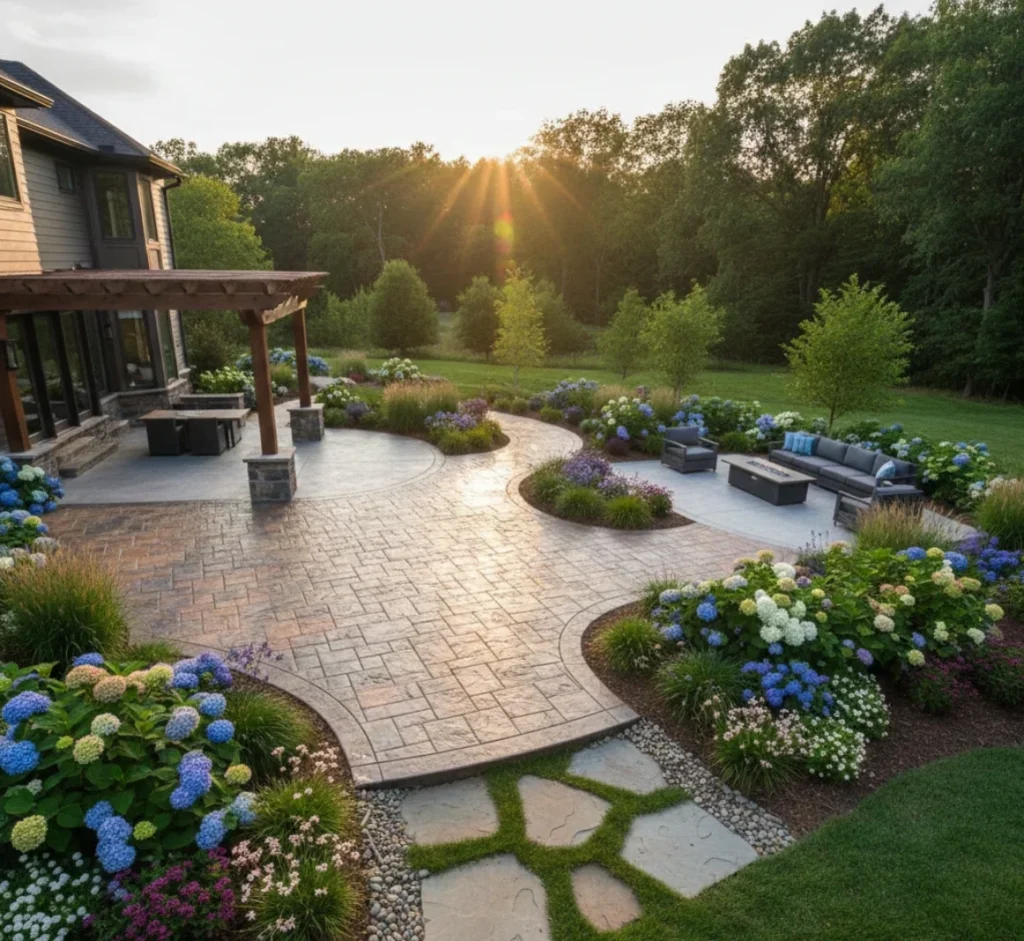
Stamped concrete is often chosen because it looks like natural stone, brick, or slate without the higher cost of those materials. Homeowners sometimes assume the decorative finish makes it less durable than a standard concrete patio, but that’s not the case.
The concrete underneath is the same. What changes is the way the surface is finished.
The Concrete Is the Same
A stamped concrete patio starts with the same concrete used for a traditional patio. Before the concrete hardens, contractors press textured mats into the surface to create the desired pattern. Contractors can also add color to make the patio look like natural materials.
Because the slab is built the same way, a stamped concrete patio lasts as long as any other concrete patio, depending on the same factors. A properly installed stamped patio can last 30 years or more when it’s built on a stable base and maintained over time.
Why Sealing Matters More
All concrete benefits from a quality sealer, but stamped concrete has an extra reason to be protected.
The sealer helps preserve the color and highlights the texture that give the patio its decorative appearance. Without that protective layer, sunlight, rain, and foot traffic can gradually dull the finish.
Keeping the patio sealed doesn’t just improve the way it looks. It also helps reduce water absorption, making stains and freeze-thaw damage less likely.
Protecting the Decorative Finish
Everyday use can slowly wear down the surface if you don’t care for it properly.
Dragging heavy furniture across the patio may scratch the finish, while grease from grills or spilled food can leave stains if you don’t clean them promptly. Furniture pads under chair and table legs can help reduce scratches, especially when you move pieces often.
When you clean the patio, use products designed for decorative concrete. Harsh chemicals or aggressive pressure washing can damage the finish and shorten the sealer’s life.
With regular cleaning and resealing, a stamped concrete patio can continue looking attractive for decades while offering the same strength and durability as a standard concrete patio.
Build a Patio Designed to Last With Premier Concrete
A concrete patio lasts for decades because of good planning. It lasts because every stage of the project is done correctly, from preparing the base and choosing the right concrete mix to allowing enough time for curing and keeping up with routine maintenance.
Once the patio is in place, simple habits like cleaning the surface, sealing it when needed, and repairing small cracks early can make a noticeable difference in its long-term performance. Those small steps help protect your investment and reduce the chance of more expensive repairs later.
If you’re planning a new patio or replacing one that’s showing signs of age, Premier Concrete can help you choose a design that’s built for long-term durability. Our team installs standard, stamped, exposed aggregate, and decorative concrete patios designed to provide years of dependable outdoor living.
Contact Premier Concrete today to schedule a consultation and start planning a patio you’ll enjoy for decades.