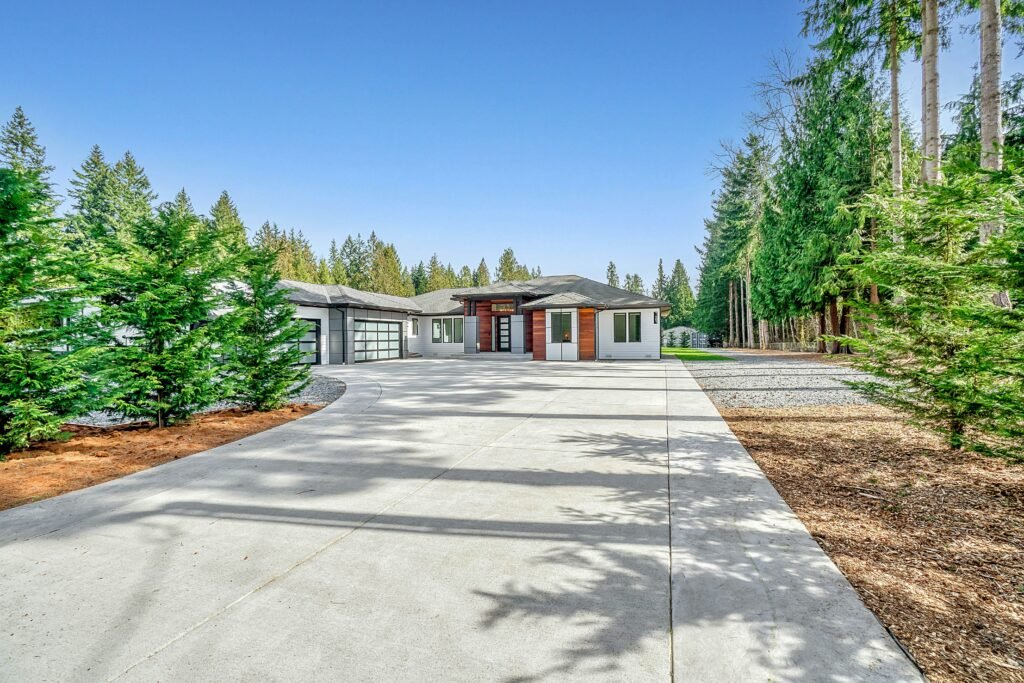
Concrete is one of the most popular driveway materials in Northeast Indiana because it balances durability, curb appeal, and long-term value. But if you’re pricing a new pour or planning a driveway replacement, the big question is always the same: what’s the real concrete driveway cost in Fort Wayne, IN, and what makes it go up or down?
This guide breaks down the typical cost ranges, the biggest pricing factors, and smart ways to plan your budget without cutting corners that could shorten your driveway’s lifespan.
Quick answer: The typical concrete driveway cost ranges
Concrete driveway pricing is usually quoted per square foot, then adjusted based on thickness, prep work, reinforcement, finish, and access. In Fort Wayne, IN, most homeowners land in a mid-range price when the site is straightforward and the design is standard.
Fast facts (for quick planning)
● Most concrete driveways are priced per square foot, not as a flat number.
● Demolition and haul-away can be a major line item for driveway replacement.
● Thickness and reinforcement matter most for durability (especially for heavier vehicles).
● Decorative finishes (stamped, colored, exposed aggregate) can raise costs but also boost curb appeal.
Concrete driveway cost table (common budget scenarios)
Use this table to understand what you’re paying for. Actual totals vary by layout, soil, drainage, and design choices.
| Scenario | What it usually includes | Why the price changes |
|---|---|---|
| Basic driveway installation | Standard broom finish, typical thickness, minimal grading | Lowest labor + simplest finish |
| Mid-range driveway installation | Better base prep, reinforcement, clean edges, and minor drainage work | More materials + more time on prep |
| Driveway replacement (remove & replace) | Demolition, disposal, new base work, new pour | Demo + haul-away + base correction |
| Decorative concrete driveway | Stamped pattern or exposed aggregate, color, and sealing | Extra steps + specialty materials |
| Heavy-duty driveway | Increased thickness, stronger commercial concrete grade mix, and more reinforcement | Built for heavier loads and longevity |
What Google results usually cover (and what homeowners actually need)
What often gets missed is how local conditions and site prep affect cost in a place like Fort Wayne, IN, especially freeze-thaw cycles, drainage needs, and the condition of the existing base if you’re doing a driveway replacement. A quote that looks “high” might actually reflect the work needed to prevent cracking, settling, and water issues later.
The biggest factors that change the cost
1) Size and layout (square footage + shape)
2) Demolition and disposal (for driveway replacement)
If your current driveway has multiple layers, thick sections, or a lot of rebar, demolition can be more involved. On the flip side, if removal is clean and access is easy, driveway replacement can be more straightforward.
3) Base preparation and grading
This is where long-term performance is won or lost. A driveway is only as stable as what it sits on.
Proper driveway installation often includes:
● Excavation to the right depth
● Compacted stone base
● Grading for water runoff
● Addressing soft spots or poor soil
If the existing base is uneven, waterlogged, or has settled over time, correcting it can increase
upfront cost, but it also reduces the risk of future cracking and sinking.
4) Thickness (and why it matters)
A thicker slab uses more concrete and can require additional reinforcement. That increases cost, but it can be a smart investment if you routinely park heavier vehicles or want maximum longevity.
5) Reinforcement (and why it matters)
Budget tip: Ask what reinforcement is included and why. The “right” choice depends on your driveway’s use, soil conditions, and the contractor’s build approach.
6) Concrete mix strength and additives
In climates with freeze-thaw cycles, the right mix and finishing practices help reduce surface scaling and premature wear. This is one of those behind-the-scenes factors that can affect concrete driveway cost without being obvious from a glance at the quote.
7) Finish type: broom, smooth, exposed aggregate, stamped
This is where long-term performance is won or lost. A driveway is only as stable as what it sits on.
Proper driveway installation often includes:
● Excavation to the right depth
● Compacted stone base
● Grading for water runoff
● Addressing soft spots or poor soil
If the existing base is uneven, waterlogged, or has settled over time, correcting it can increase
upfront cost, but it also reduces the risk of future cracking and sinking.
8) Control joints, saw cuts, and crack management
A quality driveway installation includes a joint plan (too few joints is a common shortcut). If your quote doesn’t mention joints or saw cutting, it’s worth asking.
9) Drainage and water management
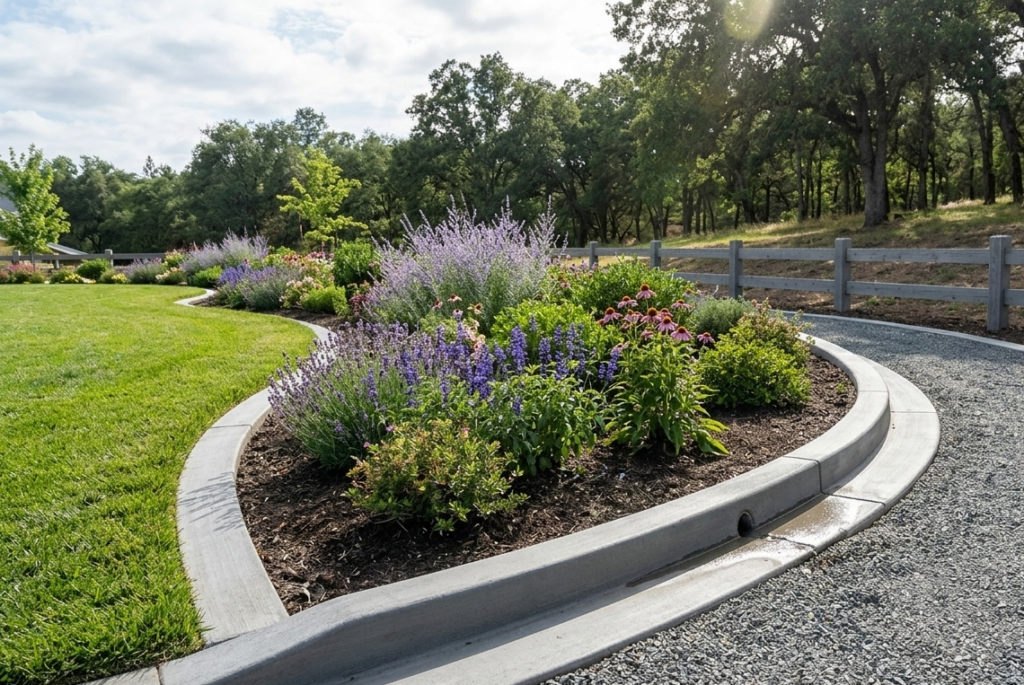
Drainage solutions might include regrading, adding a channel drain, adjusting the driveway pitch, or improving runoff paths. These can add cost, but they prevent expensive repairs later.
10) Access and logistics
Budget tips that don’t sacrifice quality
Cutting the wrong corners can turn a “good deal” into a driveway that cracks, settles, or drains poorly. These tips help you keep costs reasonable while protecting the outcome.
1. Prioritize prep work over upgrades. If you have to choose, invest in base prep and drainage before decorative finishes.
2. Be clear about how you’ll use the driveway. Extra thickness or reinforcement may be worth it if you park heavy vehicles.
3. Keep the design efficient. Simple shapes cost less than lots of curves and tight borders.
4. Ask what’s included in the quote. Make sure demolition, base, reinforcement, joints, and cleanup are spelled out.
5. Consider phased upgrades. You can keep a standard finish now and add complementary landscaping or edging later.
Did you know?
Common questions homeowners ask
How much does a concrete driveway cost per square foot in Fort Wayne, IN?
Is concrete cheaper than asphalt for a driveway?
What’s the difference between driveway installation and driveway replacement?
Driveway installation typically means building a driveway where there isn’t one (or where the site is already properly prepared). Driveway replacement usually includes removing old concrete or asphalt, correcting the base if needed, and then pouring the new slab. Replacement often costs more because demolition and disposal are added.
How long does a concrete driveway last?
How long before you can drive on a new concrete driveway?
Does stamped concrete cost extra?
Yes, stamped concrete typically costs more than a standard broom finish because it requires additional labor, materials, and usually sealing. It can be a great choice if you want a high-end look and are comfortable with the added investment.
What maintenance does a concrete driveway need?
What maintenance does a concrete driveway need?
Use this to compare when reviewing estimates for driveway replacement or driveway installation.
● Scope includes demolition and disposal (if replacing)
● Base depth and compaction method are specified
● Slab thickness is specified (and any thickened edges)
● Reinforcement type is specified (rebar, mesh, fiber)
● Finish type is specified (broom, exposed aggregate, stamped)
● Joint plan is included (control joints/saw cuts)
● The drainage plan is addressed
● Cleanup and site protection are included
● Timeline and curing guidance are included
Final thought: the “best” driveway is the one built for your property
Ready to price your project in Fort Wayne, IN?
If you’re comparing concrete driveway cost options or planning a driveway replacement or
driveway installation in Fort Wayne, IN, the team at Premier Concrete can help you choose the
right scope for your property and budget. Call today for a free quote and expert guidance!